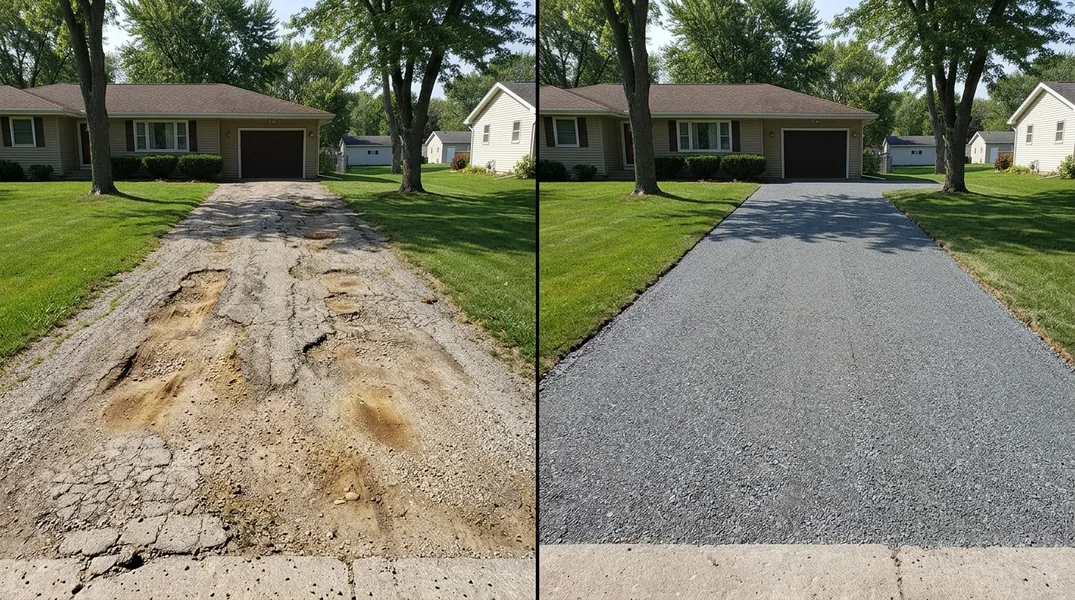
Understanding Rockford's Clay Subsoil Problem
If you live in Rockford, you've probably noticed something peculiar about how driveways age compared to other regions. The culprit isn't just freeze-thaw cycles or heavy traffic. It's the clay-rich subsoil that lies beneath most properties in northern Illinois. This heavy clay composition creates a perfect storm for asphalt damage when combined with our region's weather patterns.
Clay soil is fundamentally different from sandy or well-draining soil. When it gets wet, clay expands and becomes unstable. When it dries, it contracts and creates voids. This constant cycle of expansion and contraction puts tremendous pressure on anything sitting on top of it, including your asphalt driveway. Homeowners in Rockford often find that their driveways fail prematurely not because of poor installation, but because of what's happening beneath the surface.
Frost Heave: Why Your Driveway Buckles in Winter
One of the most dramatic problems caused by clay subsoil is frost heave. When winter arrives and temperatures drop below freezing, water trapped in clay soil freezes and expands. This expansion pushes upward with surprising force, sometimes lifting your entire driveway by several inches. Come spring, as the ground thaws, the driveway settles unevenly, creating cracks, buckles, and sections that no longer sit flush with your garage entrance.
Driveway Repair from frost heave damage can be expensive and complicated. The problem is that simply patching the cracked asphalt doesn't address the underlying cause. The clay is still there, still holding water, and frost heave will happen again next winter. This is why understanding whether you need a quick repair or a more comprehensive solution is critical for protecting your investment.
The severity of frost heave depends on several factors: how much water is present in the soil, how deep the frost penetrates, and whether your driveway has proper base preparation and drainage. Driveways installed without adequate gravel base or drainage systems are especially vulnerable. If you've already experienced buckling or significant heaving, it's time to call a professional to evaluate whether Driveway Repair or a complete replacement is the better long-term solution.
Poor Drainage and Water Accumulation Beneath Your Driveway
Clay's inability to drain water is perhaps its biggest problem. While sandy soils allow water to percolate downward, clay acts like a barrier, trapping moisture at the surface and in shallow subsurface layers. This trapped water weakens the subgrade, reduces structural support, and creates the ideal conditions for the expansion and contraction cycles that damage asphalt.
When water sits beneath your driveway, it doesn't just cause frost heave in winter. It also softens the soil, allowing the asphalt to flex and move under the weight of vehicles. Over time, this movement creates stress points where cracks form. These cracks then allow more water to penetrate deeper into the structure, accelerating deterioration. This is why driveways in Rockford often develop potholes and alligator cracking faster than homeowners expect.
Proper drainage is essential when installing a new driveway on clay soil. A well-designed driveway includes a gravel base layer that provides some drainage, proper slope to shed water away from the structure, and sometimes a drainage layer or system to manage subsurface moisture. Without these elements, even a quality asphalt surface will fail prematurely. This is why professional Asphalt Driveway Paving & Installation that accounts for local soil conditions is so important.
Pothole Repair and Asphalt Patching: When Temporary Fixes Fail
When potholes appear in your driveway, the temptation is to get a quick Pothole Repair & Asphalt Patching job done as inexpensively as possible. Temporary patches can work if the underlying soil is stable and the damage is isolated. However, in clay-heavy areas, potholes often reappear within months because the soil beneath them continues to shift and settle.
A pothole forms when water enters cracks, freezes, and expands, or when the subgrade becomes too soft to support traffic loads. Simply filling the hole with asphalt doesn't restore the structural integrity of the base layer. If the clay beneath is compromised, the patch will fail again. This is why some homeowners find themselves repeatedly paying for Pothole Repair & Asphalt Patching only to see problems return.
The real question isn't whether you can patch a pothole, but whether the surrounding driveway is still sound enough to warrant patching. If your driveway is relatively new and the pothole is isolated, a quality patch might be sufficient. But if your driveway is aging, shows multiple cracks, or has experienced frost heave, you may be better served by evaluating whether repair or replacement makes financial sense for your long-term situation.
Repair or Replace Asphalt Driveway: Making the Right Decision
The decision to repair or replace your asphalt driveway depends on several factors, with clay soil conditions being a major consideration. A driveway that's only five to seven years old and showing damage may have been installed without proper attention to drainage and base preparation. In this case, replacement with proper site preparation might be the smarter investment than repeated repairs.
Conversely, a fifteen-year-old driveway that's still structurally sound might benefit from Asphalt Resurfacing & Overlay, which adds a new wearing surface without the cost and disruption of complete removal and replacement. However, if your current driveway shows signs of base failure, severe frost heave, or widespread cracking, resurfacing won't address the root problem. You'll end up with the same underlying issues.
The best way to make this decision is to have a professional assessment. A qualified contractor can evaluate your soil conditions, drainage situation, and the extent of existing damage to give you an honest recommendation. Some contractors will push replacement to maximize revenue, while others might oversell patching. Rockford Asphalt Paving provides honest evaluations so you can make an informed decision. Contact us at (815) 706-5982 for a free estimate that includes a detailed assessment of your driveway's condition and soil factors.
Protecting Your Investment: Proper Installation on Clay Soil
If you're planning new Asphalt Driveway Paving & Installation, understanding how to work with clay soil is essential. The best practices include removing poor subgrade material, installing a proper gravel base (typically four to six inches of compacted stone), ensuring adequate slope for drainage, and sometimes adding a geotextile fabric or drainage layer to manage moisture.
The initial cost of proper site preparation is higher than cutting corners, but it pays dividends in driveway longevity. A driveway installed correctly on clay soil can last fifteen to twenty years or more. One installed without proper base preparation might fail in five to seven years, making the initial savings illusory. When you're comparing pricing from different contractors, make sure you understand what's included in the base preparation, not just the asphalt thickness.
Maintenance also matters. Seal coating your asphalt every two to three years helps prevent water infiltration, which is especially important on clay soil where moisture management is critical. Filling cracks promptly prevents water from reaching the base layer. Regular maintenance extends the life of your driveway significantly, regardless of the soil conditions beneath it.
Looking for a professional asphalt paving contractor in Rockford? Rockford Asphalt Paving responds fast for all your asphalt paving needs.
Get a Free Quote