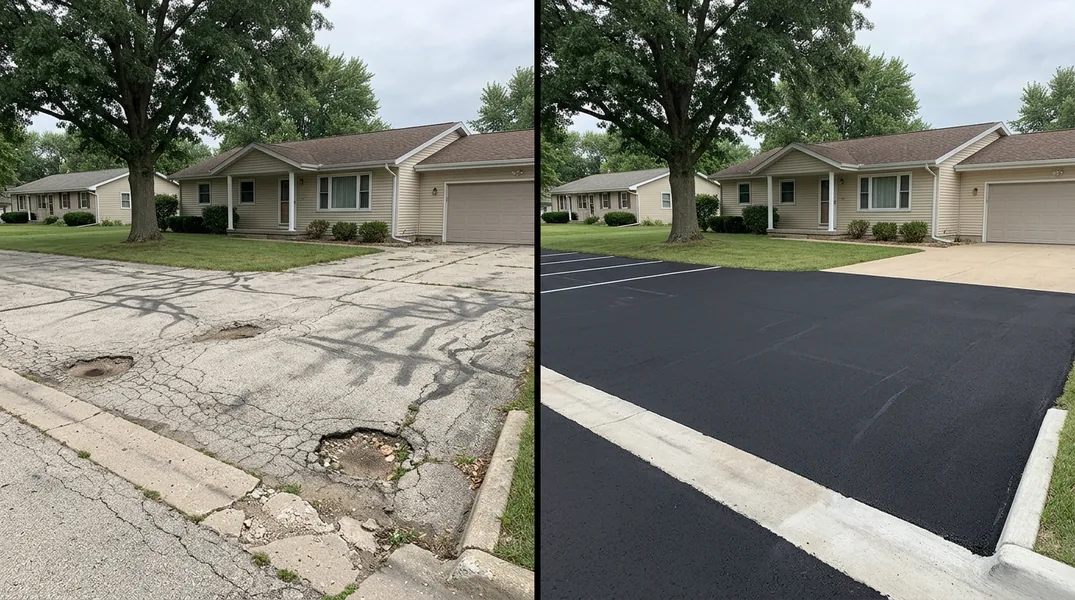
The Hidden Problem Under Post-War Ranch Driveways
If you own a post-war ranch home in Winnebago County, your driveway tells a story. Many of these classic mid-century properties, built between the 1940s and 1960s, were constructed during an era when driveway standards were far less rigorous than today. Back then, contractors often laid asphalt over poorly compacted base materials, sometimes with minimal site preparation. Fast forward to today, and homeowners across Rockford are discovering that their driveways are suffering from the consequences of those shortcuts.
The real culprit is inadequate compaction. When the subgrade and base layers aren't properly compacted before asphalt is laid down, the driveway becomes vulnerable to settling, cracking, and water damage. This is especially true in the Midwest, where freeze-thaw cycles put tremendous stress on weak foundations. Proper compaction creates a stable, load-bearing surface that can handle the weight of vehicles and the punishment of seasonal weather changes. Without it, even a well-installed asphalt layer will eventually fail.
Water Pooling on Driveway: A Sign of Compaction Failure
One of the most obvious signs that your driveway's base wasn't properly compacted is water pooling on driveway surfaces after rain or snow melt. If you notice standing water that doesn't drain within an hour or two, that's a red flag. Water pooling isn't just an eyesore; it's actively damaging your asphalt. When water sits on the surface, it seeps into cracks and penetrates the layers below, where it expands and contracts with temperature changes. In winter, this water freezes, pushing up on the asphalt from underneath and creating potholes, heaves, and further deterioration.
Many homeowners in Loves Park and surrounding areas have dealt with this issue for years, assuming it's just a normal part of driveway ownership. But it doesn't have to be. The problem often traces back to the original installation: if the base layers weren't compacted to the proper density, the driveway surface will naturally settle unevenly, creating low spots where water collects. This is why Asphalt Driveway Paving & Installation done correctly from the start is so important.
Understanding Driveway Drainage Solutions for Winnebago County Homes
If your existing driveway is already showing signs of poor compaction and drainage issues, there are several driveway drainage solutions available. The most common approach is to improve surface grading, ensuring that the driveway slopes gently away from your home and any structures. Even a slight slope (typically 1 to 2 percent) can make a huge difference in directing water away from problem areas. However, for properties with more serious drainage challenges, more sophisticated solutions may be needed.
A driveway french drain is one effective option for homes where water pooling is severe. This system uses a perforated pipe installed beneath or alongside the driveway to intercept and redirect groundwater away from the asphalt surface. Similarly, a trench drain driveway system can be installed along the edges or center of your driveway to capture surface water before it pools. These solutions work best when installed during new Asphalt Driveway Paving & Installation, but they can also be retrofitted to existing driveways in some cases. The key is addressing both the symptom (water pooling) and the underlying cause (poor compaction and grading).
Why Modern Compaction Standards Matter for Your Investment
Today's professional asphalt contractors follow strict compaction standards that simply didn't exist when your post-war ranch was built. Modern specifications require base materials to be compacted to 95 to 98 percent of their maximum density, verified with field testing. This level of compaction ensures that the base won't shift or settle under the weight of vehicles and seasonal stress. When compaction is done correctly, your asphalt driveway will last 15 to 20 years or more, depending on climate and maintenance.
The difference between a properly compacted driveway and a poorly compacted one can be dramatic. A well-compacted base resists rutting (those tire track depressions that develop over time), minimizes cracking, and sheds water effectively. It also reduces the risk of edge failure, where the sides of the driveway crumble or crack away. For homeowners in Machesney Park and throughout Winnebago County, investing in proper compaction during installation pays dividends for years to come. If your current driveway is showing age and wear, Asphalt Resurfacing & Overlay or Driveway Repair done with modern standards can extend its life significantly.
Assessing Your Post-War Ranch Driveway: What to Look For
If you're unsure whether your driveway suffers from compaction issues, there are several telltale signs to watch for. Beyond obvious water pooling, look for alligator cracking (a pattern of interconnected cracks that resemble alligator skin), rutting along the wheel paths, and soft or spongy spots that feel unstable under your feet. You might also notice that small potholes or cracks appear and reappear even after being patched. These symptoms all point back to a weak, improperly compacted foundation.
Another sign is uneven settling, where one section of the driveway sits noticeably higher or lower than adjacent areas. This is particularly common in post-war driveways because the original base work was often inconsistent across the entire surface. The good news is that a professional assessment can pinpoint exactly what's happening beneath the surface. Rockford Asphalt Paving can evaluate your driveway and recommend whether Pothole Repair & Asphalt Patching, resurfacing, or a complete replacement makes the most sense. Contact us at (815) 706-5982 for a free estimate and let's discuss your driveway's condition.
Moving Forward: Proper Installation and Long-Term Maintenance
Whether you're planning a new driveway installation or rehabilitating an existing one, the foundation is everything. A properly executed project begins with site preparation, including excavation to remove unsuitable soil, installation of a compacted base layer (typically 4 to 6 inches of crushed stone), and careful attention to grading and drainage before the asphalt is ever laid down. This is the work that homeowners don't see, but it's the work that determines whether your driveway will thrive or fail.
Once your driveway is in place, regular maintenance helps preserve that investment. Seal coating every 2 to 3 years protects the asphalt surface from UV damage and water penetration. Prompt repair of small cracks and potholes prevents them from spreading and causing more serious damage. If you're ready to address your post-war ranch driveway issues with modern compaction standards and professional drainage solutions, Rockford Asphalt Paving is here to help. Call us at (815) 706-5982 or visit our website to request your free estimate today. Your driveway deserves better than the shortcuts of the past.
Looking for a professional asphalt paving contractor in Rockford? Rockford Asphalt Paving responds fast for all your asphalt paving needs.
Get a Free Quote