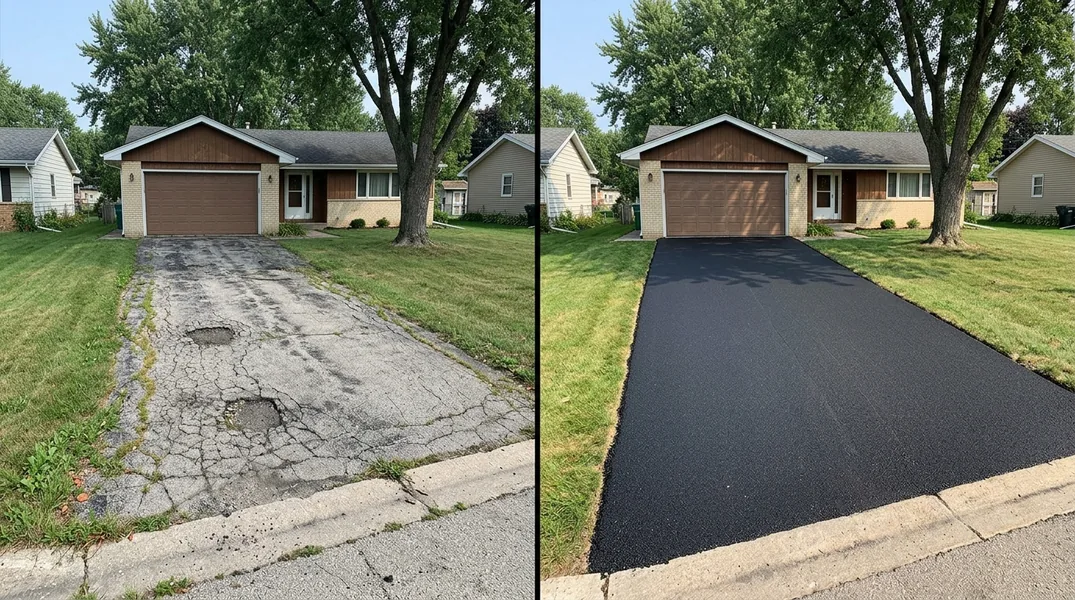
Signs Your Driveway Needs Attention
Your driveway is one of the hardest working surfaces on your property. It endures heavy vehicle traffic, temperature swings, moisture infiltration, and the freeze-thaw cycles that Rockford winters bring year after year. Over time, even well-maintained asphalt will show wear. The key is recognizing when minor damage calls for Driveway Repair and when a full replacement makes more financial sense.
Common warning signs include cracks that branch out like spider webs, potholes that trap water, surface deterioration that exposes gravel, and large sections of pavement that have become soft or unstable. If you notice your driveway sinking in certain spots or developing an uneven surface, moisture is likely penetrating the base layer. Small cracks can be sealed relatively easily, but widespread cracking often indicates deeper structural issues. The age of your driveway matters too. Most asphalt surfaces last 15 to 20 years with proper maintenance, so if yours is approaching that milestone and showing multiple problem areas, replacement may be the smarter investment.
When Repair Makes Sense
Driveway Repair is typically the right choice when damage is localized and your driveway is still relatively young. If you have a few isolated potholes, surface cracks, or soft spots, Pothole Repair & Asphalt Patching can extend the life of your pavement for several more years at a fraction of replacement cost. Patching works best when the surrounding asphalt is still structurally sound and the damaged area covers less than 30 percent of the total surface.
Homeowners in Rockford should also consider seal coating as a preventive repair strategy. Regular seal coating fills hairline cracks, protects against UV damage, and prevents water from seeping into the base layer where it causes the most expensive damage. If you address small problems early with targeted repairs and consistent maintenance, you can often add five to ten years to your driveway's lifespan. The cost of a few repairs now is substantially less than the bill for a complete replacement later.
When Replacement Becomes the Better Choice
If your driveway has widespread cracking, multiple potholes scattered across different areas, or large sections of deteriorated pavement, replacement is usually more economical than repair. When more than 30 percent of the surface shows significant damage, or when the base layer has failed and the driveway is sinking or buckling, patching only delays the inevitable. Continuing to repair a heavily damaged driveway is like putting new tires on a car with a failing engine: you're throwing good money after bad.
Asphalt Driveway Paving & Installation gives you a fresh start with a properly prepared base, correct slope for drainage, and new asphalt that will serve you reliably for 15 to 20 years. Additionally, a new driveway improves your home's curb appeal and can increase property value. If your current driveway is more than 15 to 20 years old and showing multiple problem areas, a full replacement often provides better value than continued repairs. Alternatively, Asphalt Resurfacing & Overlay can be a middle-ground option if the base is still solid but the surface is worn.
New Asphalt Driveway Care: How Long for Asphalt to Cure
If you choose replacement or new installation, understanding the curing process is essential for protecting your investment. Many homeowners don't realize that new asphalt continues to harden and strengthen long after installation. The surface may feel firm within 24 to 48 hours, but the material is still curing and remains vulnerable to damage during this critical window. How long for asphalt to cure fully depends on weather conditions, temperature, and the specific asphalt mix used.
In ideal conditions, new asphalt typically reaches 85 to 90 percent of its full strength within 7 to 10 days. However, full curing can take 6 to 12 months, during which the material gradually hardens and densifies. During the first few weeks, avoid parking heavy vehicles on the surface, and keep foot traffic to a minimum. Warm weather accelerates curing, while cold, damp conditions slow it down. Once your new driveway has cured sufficiently, how often to seal driveway becomes your next maintenance priority. Most experts recommend seal coating every 2 to 3 years to protect the surface and extend pavement life.
How Long Before You Can Drive on New Asphalt
How long before you can drive on new asphalt is a question every homeowner asks immediately after installation. The short answer: you can typically drive on it within 24 to 48 hours in warm weather, but light driving only. Avoid heavy trucks, parking in the same spot repeatedly, or rapid acceleration and braking during this period. The asphalt will still be soft, and concentrated weight can leave tire marks or depressions that won't fade once the surface hardens.
For new asphalt driveway care, the first week is critical. Keep vehicle traffic to a minimum, and avoid parking on the surface if possible. If you must park, rotate your vehicle's position daily to distribute weight evenly. After about 7 to 10 days of good weather, the asphalt should be firm enough for normal use, though it continues curing underneath. Cold or wet weather extends this timeline significantly. If your new driveway was installed during spring or fall when temperatures are cool, add an extra week to the curing period. If you're unsure whether conditions are right for normal driving, contact Rockford Asphalt Paving at (815) 706-5982 for specific guidance based on your installation date and current weather.
Creating a Long-Term Maintenance Plan
Whether you repair or replace your driveway, a consistent maintenance plan is your best defense against future problems. New asphalt driveway care starts immediately after installation and continues for the life of the pavement. The most important step is understanding how often to seal driveway to prevent damage. Seal coating every 2 to 3 years creates a protective barrier that blocks UV rays, prevents water infiltration, and keeps the asphalt flexible. Without regular seal coating, your driveway ages rapidly and becomes vulnerable to cracking and potholes.
Beyond seal coating, inspect your driveway each season for small cracks and address them promptly. Fill any cracks with crack filler before they expand and allow water to penetrate the base layer. Keep your driveway clean and remove standing water after rain. If you live in an area with harsh winters, apply a deicer product that won't damage asphalt, and avoid rock salt when possible. These simple steps cost very little but add years to your driveway's lifespan. If you're ready to evaluate your current driveway's condition or discuss repair versus replacement options, Rockford Asphalt Paving is here to help. Call us at (815) 706-5982 or request a free estimate today. Our experienced team will assess your driveway and recommend the most cost-effective solution for your specific situation.
Looking for a professional asphalt paving contractor in Rockford? Rockford Asphalt Paving responds fast for all your asphalt paving needs.
Get a Free Quote